
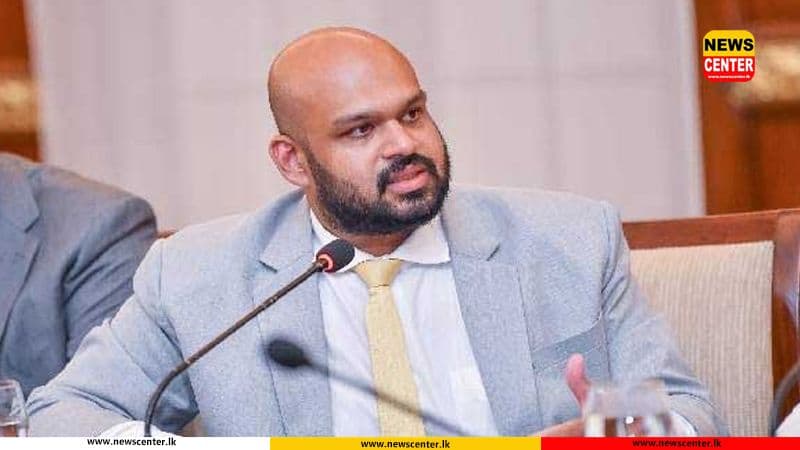
Speaking during today’s parliamentary debate on the Prevention of Money Laundering (Amendment) Bill, the Financial Transactions Reporting (Amendment) Bill, and the Convention on the Suppression of Terrorist Financing (Amendment) Bill, Batticaloa District MP Shanakiyan Rasamanickam expressed support for stronger measures to combat money laundering and corruption, while warning that the proposed legislation grants excessive and unchecked powers to law enforcement authorities.
Mr. Rasamanickam reaffirmed that his party fully supports efforts to prevent money laundering, strengthen anti-corruption laws, and improve financial transparency. He noted that long before stricter legal requirements were introduced, he had voluntarily disclosed his assets and liabilities in the interest of accountability.
However, he cautioned that the Bills, in their current form, allow the police to exercise extraordinary powers without meaningful judicial oversight. Under the proposed law, the police would be able to freeze an individual’s property for an initial period of 14 days, followed by a further 21 days, without first obtaining approval from a court.
“These powers should be exercised under the supervision of the judiciary, not left solely to the discretion of the police,” he said.
Mr. Rasamanickam pointed out that the Sri Lanka Police consists of approximately 80,000 officers and recalled the recent statement by the Police Media Spokesperson acknowledging that he could not personally vouch for the integrity of every officer. Granting such sweeping powers without judicial safeguards, he warned, increases the risk of abuse, corruption, and arbitrary action.
He also criticised the lack of parliamentary oversight in the proposed legislation. Section 24 of the Financial Transactions Reporting (Amendment) Bill establishes a committee that reports only to the Cabinet and is not accountable to Parliament. Similarly, the Financial Intelligence Unit is entrusted with significant powers without adequate mechanisms for parliamentary scrutiny.
Drawing parallels with the debate on the Online Safety legislation, Mr. Rasamanickam noted that he had consistently argued that intrusive powers affecting citizens’ rights should be vested in the judiciary rather than unelected bodies. He recalled that the current President and members of the National People’s Power supported that position at the time.
Highlighting the realities faced by the Tamil community, he stated that people in the Northern and Eastern Provinces continue to be subjected to frequent investigations by the Terrorism Investigation Division (TID). Young people are routinely summoned for questioning, members of his own party have been investigated, and in some cases individuals are questioned simply because relatives have sent them money from overseas.
He warned that, if enacted without adequate safeguards, the new legislation could further expose ordinary citizens to arbitrary investigations and prolonged freezing of assets based solely on police suspicion, without prior judicial approval.
“The people of the North and East continue to live under the pressures of heavy policing and militarisation. Laws that confer extraordinary powers without independent judicial oversight will only deepen fear and mistrust,” he said.
Concluding his remarks, Mr. Rasamanickam urged the Government to legislate with the future in mind.
“The National People’s Power Government will not remain in office forever. The powers granted today will one day be exercised by another administration. Parliament has a responsibility to ensure that these laws contain adequate safeguards to prevent future abuse, regardless of who is in power.”

The Department of Prisons has posthumously promoted the eight prison officers who were killed during last week’s deadly unrest at...
about 2 hours ago

President Anura Kumara Dissanayake today launched the second phase of the Anuradhapura North Water Supply Project, which will provide safe...
about 2 hours ago

The final rites of veteran Sri Lankan singer Mariazelle Goonetilleke will be held on July 13 at the Borella General...
about 2 hours ago

Veteran vocalist Mariazelle Goonetilleke has passed away at the age of 68, according to family sources. Sources indicate that...
Featuredabout 14 hours ago
Speaking during today’s parliamentary debate on the Prevention of Money Laundering (Amendment) Bill, the Financial Transactions Reporting (Amendment) Bill, and...
about 14 hours ago

Yasara Abeynayake provided evidence before the Colombo High Court today (09) regarding the case filed against former President Mahinda Rajapaksa’s...
Featured1 day ago

The house of a notorious underworld figure known as "Thembili Lahiru" has been set ablaze by an unidentified group in...
1 day ago